
Israeli attacks kill dozens in Lebanon as US, Iran to hold talks on truce | US-Israel war on Iran News
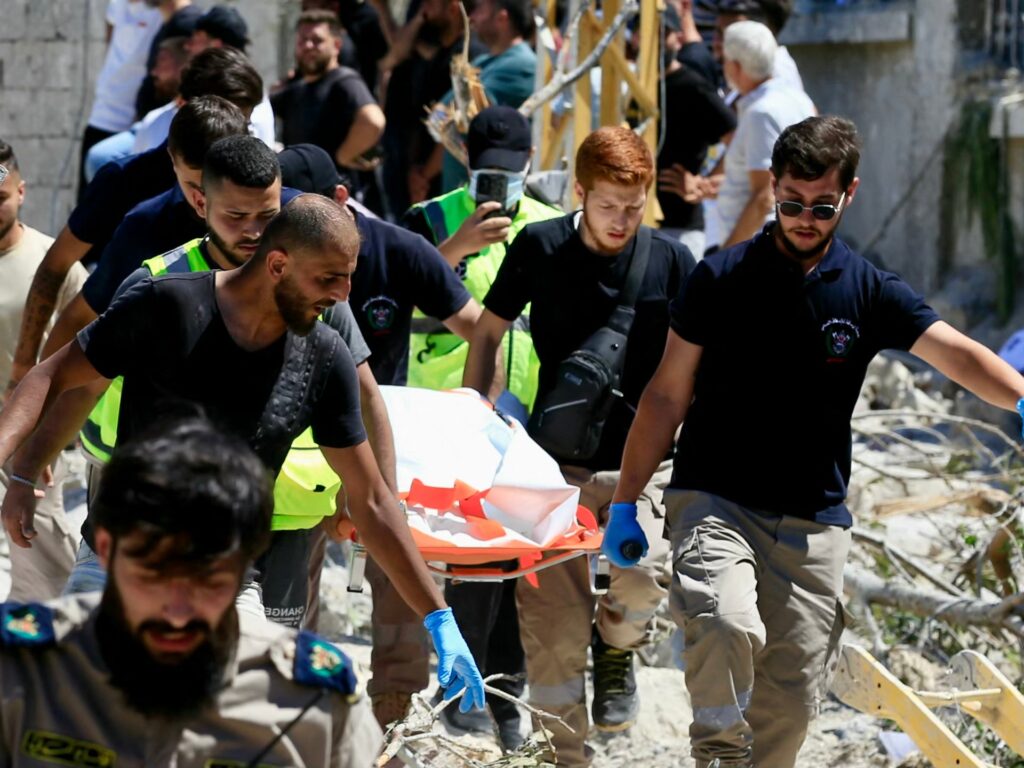
Israeli strikes in Lebanon have killed dozens of people despite a ceasefire being in place as the United States and Iran are expected to hold talks on ending their war and cementing the truce in Lebanon.
Follow-up talks between Iran and the US on the memorandum of understanding (MOU) they signed this week are to be held in Burgenstock, Switzerland, on Sunday, Pakistan’s Ministry of Foreign Affairs said. US and Iranian representatives are to participate along with mediators from Pakistan and Qatar, it added.
Recommended Stories
list of 4 itemsend of list
But Israeli air raids and drone attacks in southern Lebanon, which continued even after a renewed ceasefire took effect on Friday, have complicated the planned talks. Iran views a ceasefire in Lebanon as essential to the diplomatic process, saying it could “make or break” the US-Iran talks.
Israeli strikes killed 16 people and wounded 12 in Nabatieh district in the country’s south on Saturday, the Lebanese Civil Defence agency said.
A Lebanese soldier was killed in an Israeli attack on the village of Kfar Reman, Lebanon’s National News Agency (NNA) said.
The NNA reported Israeli attacks in Tyre district, including an Israeli strike on the village of Barish that killed four members of the same family – a father, a mother and their two children. Another Israeli raid hit a house in Sohmor in the western Bekaa Valley while a family was inside, killing four people and injuring one, the NNA said.
An Israeli attack on Qanarit in Sidon district killed at least seven people and wounded 13, Lebanon’s Health Emergency Operations Centre said.
Lebanon’s Ministry of Public Health said 83 people were killed and 141 wounded in Israeli attacks on Friday, just after the renewed ceasefire was announced. Most of the casualties were in southern Lebanon with others in the east.
‘Shaky nature’ of ceasefire
Reporting from Tyre on Saturday, Al Jazeera’s Heidi Pett said there had been more than 100 Israeli air strikes on southern Lebanon since midnight.
“It’s been a devastating day here. There are civilians among those killed and wounded,” she said.
“There have been soldiers from the Lebanese army who have been killed today, one of them in a targeted attack on his motorbike and that has spurred quite a critical response from the Lebanese army, who usually stay out of politics,” Pett added.
Lebanon’s Health Ministry added on Saturday that Israeli attacks since March 2 have killed at least 4,057 people and wounded 12,121.
“It does point to the shaky nature of this ceasefire and also how the whole negotiating process does seem to be reliant upon Lebanon and what happens here in the coming days and weeks,” Al Jazeera’s Rob McBride reported from Beirut.
Article 1 of the MoU signed between the US and Iran explicitly states that ending the war in Lebanon is an integral part of the broader ceasefire across all fronts.
The Lebanese army said in a statement on Saturday that the continuation of Israeli attacks on Lebanon aimed to obstruct efforts to restore stability in the country.
Najat Aoun Saliba, a Lebanese member of parliament, told Al Jazeera that people in Lebanon are tired and have had enough of the killing and destruction.
“It’s also costing us [the government] a lot of money and a lot of pain,” she said, adding that both Israel and Hezbollah have used Lebanese territory to gain leverage over the war in Iran.
Hezbollah said on Saturday that it targeted Israeli troops who had advanced towards an area near Nabatieh overnight.
The Israeli military published a statement soon after saying Hezbollah had launched more than 50 projectiles towards soldiers operating in southern Lebanon overnight and the armed group was violating the ceasefire.
The Israeli army also announced that another soldier was killed in its operation in southern Lebanon, becoming the fifth to have died since the US-Iran deal was reached.
Upcoming talks between Lebanon and Israel
In November 2024, Israel and Lebanon signed a ceasefire. Since then, the Lebanese government has been seeking to disarm Hezbollah as part of a US-backed roadmap. The Lebanese government has also pushed for Israel’s withdrawal from southern Lebanon.
The text of an agreement this month called for Hezbollah’s withdrawal north of the Litani River in southern Lebanon but did not call for Israel’s full withdrawal.
The US Department of State said a new round of talks between Israel and Lebanon will take place in Washington, DC, on Tuesday and Thursday and will aim to “make progress toward a lasting peace”.
US Secretary of State Marco Rubio told Lebanese President Joseph Aoun on Friday that “Lebanon’s bilateral negotiations with Israel represent the only feasible path to reconstruction, economic recovery and ending recurrent cycles of violence”, according to the State Department.
However, the talks have not included Hezbollah, hampering any meaningful progress.
On Saturday, Ali Fayyad, a representative of the Hezbollah faction in the Lebanese parliament, said in remarks carried by Iran’s Tasnim News Agency that the armed group ruled out a ceasefire with Israel while Israeli forces remain in Lebanese territory, warning that any further aggression would meet a response.
“The position of the resistance is clear, unambiguous, non-negotiable and without retreat,” Fayyad said, adding, “A ceasefire while the enemy continues its targeting and assassinations is meaningless. The right to self-defence is established for us and is not subject to bargaining or negotiation.”