
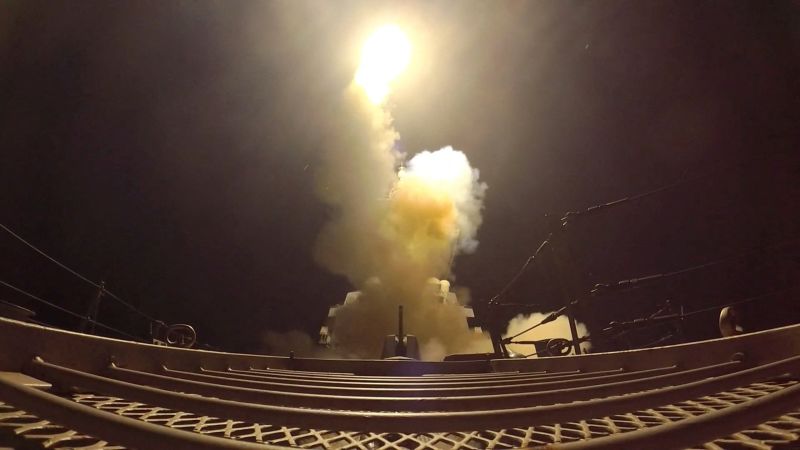
Live updates: Ceasefire disintegrates as Trump says US will reinstate blockade of Iranian ships in Strait of Hormuz
Yemen’s Iran-backed Houthi rebels have accused Saudi Arabia of carrying out strikes on the capital’s airport on Monday, warning that the attack marks the end of a years-long de facto truce with Riyadh.
“We affirm that this aggression will not pass without response and punishment,” he added.
In a separate statement, the Houthis’ Political Bureau said that the attack “reflects the level of hatred and criminality harbored by the Saudi regime – and the Americans behind it – toward our people.”
“This targeting comes in the context of implementing the U.S. desire to maintain the unjust blockade imposed on our people for more than 10 years.”
An Iranian aircraft that was approaching Sanaa airport on Monday diverted to another airfield at Hodeidah, also in a Houthi-controlled part of Yemen.
The Houthis are one of Iran’s principal allies in the region, and on several occasions since the start of the war between the US and Iran have warned they could take action to block the Bab al Mandab Strait, a chokepoint at the southern end of the Red Sea.
The Red Sea has become more important to Saudi oil exports since Iran blocked traffic through the Strait of Hormuz, making any disruption there a potential trigger for a rise in global oil prices.
Oil prices climbed to their highest levels of the day following the attack, with Brent crude rising more than 4% to around $79.25 a barrel. While crude prices have rebounded from below $72 a barrel after the Strait of Hormuz reopened earlier this month, they remain well below the $112-a-barrel wartime peak reached in mid-May.
The flare-up follows more than four years of relative calm that began with a UN-brokered truce in 2022 and was sustained by direct Saudi-Houthi talks after Riyadh and Tehran restored diplomatic ties the following year.
David Goldman contributed to this post.
Lexo edhe këto artikuj të ngjashëm:
- Iran War Live Updates: U.S. Begins New Strikes on Iran as Trump Orders Resumption of Shipping Blockade – The New York Times
- Trump reinstates Iran port blockade and vows 20% charge on cargo passing through Hormuz – BBC
- Trump reinstates Iran port blockade and imposes 20% charge on cargo passing through Hormuz
- Dua Lipa stellt sich gegen Albanien-Pläne des Trump-Clans – Spiegel
- Dua Lipa gegen Trumps Schwiegersohn