
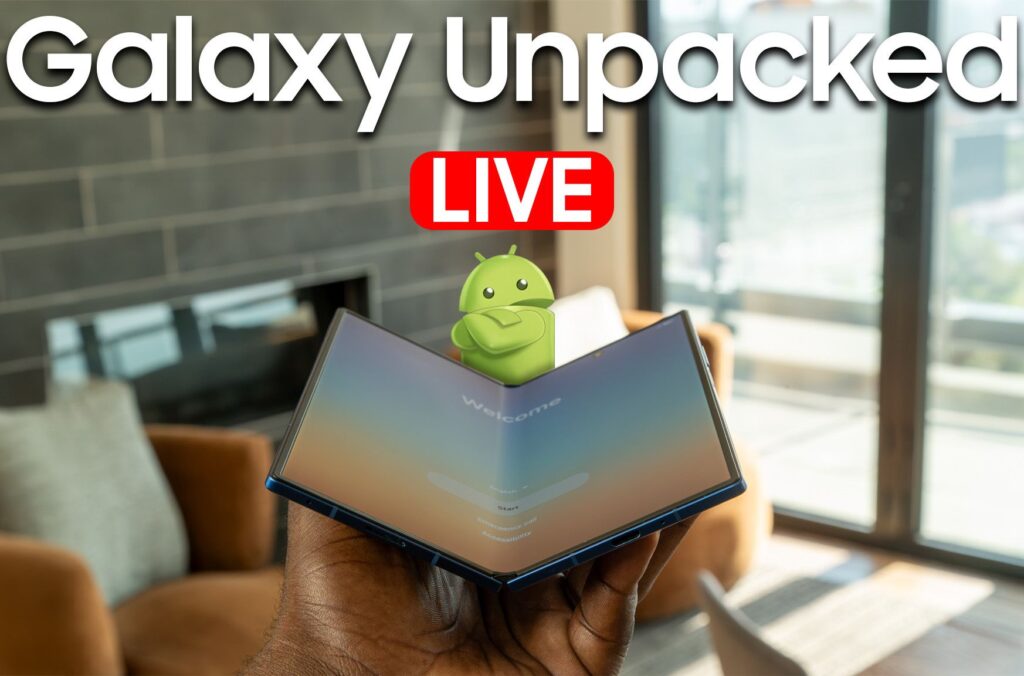
Samsung Galaxy Unpacked 2026 launch live: Z Fold 8 Ultra, Z Fold 8, Z Flip 8, Galaxy Glasses, and all the news
The Galaxy Watch 9 was also touted to continue offering its 40mm and 44mm variants. I like that smaller watch face. It feels a little nicer on the wrist, and looks more aesthetically pleasing. However, rumors suggest Samsung could alter the Galaxy Watch 9’s band this year. While the Watch 8’s band was smoother, the Watch 9 could offer a dip in the center, almost like a racing stripe.
Planting a flag on the “health-first” field means something to Samsung. It means something to me, too. Accuracy has to be on point, metrics have to be detailed, but not overwhelming. I should be able to understand at a glance what these numbers are for me and my wellbeing. Samsung has said as much in recent days, and I’m crossing my fingers that it’s true for the Galaxy Watch 9.
Another Galaxy Watch 9 teaser that’s got me raising an eyebrow is what Samsung said about the watch: “increased battery life.” The Galaxy Watch 8 has a pretty decent battery life, don’t get me wrong. But, I’m inclined to agree with my colleagues here: it could’ve been better. Hopefully, when Samsung says it’s “increased,” they mean by more than a few minutes. Give me a few more hours, then we’re cooking.
The Galaxy Watch 9 is where my eyes are going this summer’s Galaxy Unpacked—for good reason, too. I’ve kept my ear to the ground: the watch could keep that squircle design the Watch 8 had (that’s a good thing, personally). Samsung also teased the device recently, stating it will strive to become a “health-first, always-on gateway” for users.
Make no mistake, pricing has been a hot topic with Samsung’s upcoming smart glasses. They would go up against Meta’s Ray-Bans and more. So, Samsung has a line to walk here to make them appealing to the average consumer. There’s a chance one of its glasses, Jinju, could sit somewhere between $379 and $499. What’s more, these glasses could feature a 12MP camera.
I’ve mentioned this briefly before, but Samsung has two Galaxy Glasses: Jinju and Haen. These aren’t exactly equal. The former is said to lean more on the audio side of assistance with no screen. However, Haen is what I’m looking forward to. A micro-LED display for AR overlays, a notification light. This has me. But, if we do see anything, and I mean anything regarding Samsung’s Galaxy Glasses at Unpacked, it might be something along the lines of Jinju.
There’s one design change Samsung isn’t making, though, and I’m worried it’ll continue to affect users: those flat, sharp corners. I’m not sure how Galaxy Z Fold 7 owners feel about it day-to-day, but switching from that design language to the slightly curved edges on the Galaxy S26 Ultra proved to be a huge improvement in the experience, since the phone simply doesn’t dig into your palms as much. With a foldable, those sharp edges might stick out even more, especially when the phone is unfolded. I’m not sure how it’ll play out in practice, but it’s the first thing I’ll be checking when I go hands-on with the devices.
Unlike the Samsung Galaxy S26 Ultra, which I got to try out extensively, I couldn’t get my hands on the Galaxy Z Fold 7 for more than a day. But even that single day was more than enough to convince me that Samsung had made major changes to the Z Fold series. Even now, when I hold the Galaxy Z Fold 7 in my hand, it still feels like the best foldable form factor out there compared to its Chinese rivals, thanks to its slimness and apt cover display ratio. And with Samsung fixing the battery and the crease this year, the Galaxy Z Fold 8 Ultra might just be peak foldable in 2026.
Switching back to the foldables, I was hoping this would be the phone release where Samsung finally fixes its slow display PWM dimming rate, but we haven’t seen any rumors or leaks pointing to this important fix. Samsung is the sole remaining smartphone manufacturer that hasn’t addressed the issue. While Google and Apple’s methods aren’t anywhere near as good as what’s available on most Chinese smartphones, the world’s largest tech companies need to help users facing debilitating pain from the flickering displays they’ve created.
Lastly, the Galaxy Watch Ultra 2 is said to increase its display brightness to 5,000 nits, a 67% improvement over the first-generation Galaxy Watch Ultra. A 3,000-nit display was already among the brightest on any smartwatch to date, but 5,000 nits is a pretty wild number for a little wrist-mounted display.
This number might seem like overkill at first, but anyone who has ever worn a smartwatch knows how difficult they can sometimes be to see in direct sunlight or other similar conditions. As an outdoor and fitness-focused watch, it makes a ton of sense for Samsung to push the boundaries of brightness, and it’s going to make a huge difference for anyone buying a Galaxy Watch Ultra 2 when they use it outside.
While we’re still on the Galaxy Watch Ultra 2 topic, Samsung is rumored to upgrade the casing to an IP69K-resistant build. The company has fallen behind rivals with less rugged phone builds, but at least a more rugged watch makes plenty of sense.
IP69K takes all the great features of IP68 and IP69 water and dust resistance and enhances them with resistance against high-pressure, high-temperature jets at 80 degrees Celsius. While most people aren’t subjecting their wrists to such conditions, there’s little doubt that they go in hot tubs, use pressure washers, and do all sorts of similar activities while wearing their watch.
Switching gears to wearables, it looks like Samsung may be giving the Galaxy Watch Ultra 2 massive hardware upgrades, making it truly worthy of its “Ultra” moniker. The first rumor involves a huge 36% battery capacity increase, bringing the battery up from 590mAh in the first Galaxy Watch Ultra to a massive 800mAh in the Galaxy Watch Ultra 2.
Since Ultra-types are designed to fully replace a phone while out and about, it’s important for them to have epic battery life that lasts through extra-long runs, hikes, or even long hands-free phone calls while driving. The Ultra was already the best smartwatch Samsung ever made, and this battery-size improvement will make it even better.
Samsung is also rumored to have a new pair of earbuds coming. It’s unclear whether they’ll be launched at Unpacked, but rumors suggest a pair of open-ear earbuds called Galaxy Buds On. Like other open-ear earbuds, they should deliver adequate sound while letting you hear both your audio and your surroundings. It’s not clear, however, whether Samsung will offer any particular advancements to stand out among other open-ear earbuds, but Galaxy fans should be happy to have yet another option from Samsung.
I keep wanting to love the Galaxy Z Flip, and Samsung keeps getting close, but the cover screen experience continues to ruin it. After years of Motorola showing everyone how it’s done with the Razr, Samsung still officially supports only a handful of apps on the Galaxy Z Flip 7’s cover screen, while you have to use Good Lock to enable more. It’s pretty dumb, to be honest, and there’s no reason Motorola can figure this out but Samsung can’t. With any luck, the Galaxy Z Flip 8 will finally unlock the cover screen’s full potential and fully support apps without the need to download an app and a module.
I haven’t spent much time with the Galaxy Z Fold 7, but I do think it’s quite amazing how Samsung managed to make it so thin. That said, I do wish Samsung had stuck a larger battery in it, especially since the Galaxy S26 Ultra has a larger one than Samsung’s foldables. That’s one thing I’m hoping to see change with the Galaxy Z Fold 8: more battery capacity, ideally in the form of a silicone-carbon battery, as we got with the Motorola Razr Fold.
We’ve talked a lot about the differences in size and aspect ratio between the Galaxy Z Fold 8 and Z Fold 8 Ultra. I know which one I’d prefer, and it’s not the wider option, but I’m curious about what you think: Does the wider Galaxy Z Fold 8 or square Galaxy Z Fold 8 Ultra appeal to you more?
There isn’t much else to talk about Samsung’s smart glasses, but it will be interesting to see if we get a preview of what’s to come later in the year. Android XR is a bold move, and with Samsung building out One UI XR, there’s plenty of interest in seeing how the ecosystem builds out alongside Samsung’s phones, tablets, and other devices.
As for what the Galaxy Glasses actually look like, an early leak suggested a design that’s largely similar to the Meta Ray-Ban, with a rounded lens, camera on the left, and LED indicator on the right. The most intriguing thing about the glasses is that they run One UI XR, a derivative of Android XR designed to be used by Samsung. While this is just theorized, a leak suggested the glasses can be controlled with the Galaxy Ring, and that’s exciting to me; this is a big reason why I use the Even Realities G2 and its unique control ring, and if Samsung can emulate the feature, it will make the Galaxy Glasses stand out just that little bit more. As is the case with all smart glasses, Gemini is going to take center-stage, and we should also get the new avatar of Gemini Live.
What I want to see is Samsung’s take on display glasses. The MemoMind One and Even Realities G2 showcased how waveguides can be used to good effect, and these glasses actually make a difference in daily use that goes beyond mirroring notifications. The MemoMind One records and automatically transcribes audio, and this is such a time-saving feature when attending meetings. While this tech is still in its infancy, we should see heady gains on a yearly basis — there’s going to be full-color waveguides starting as early as 2027, and it will be interesting to see how those measure up. Ahead of all that though, Samsung needs to have a foot in the door.; we’ll just have to wait a little longer to see what comes out of Korea.
We don’t know many details about the Galaxy Glasses yet, but it looks like Samsung is using Qualcomm’s Snapdragon AR1 platform. These will take on Meta’s Ray-Ban glasses, but with a camera that sits closer to the eye level. Another key piece of information suggests Gemini integration will be available out of the box, and that these glasses will rely on bone‑conduction tech to deliver sound. I can understand why Samsung would be interested in these glasses; they’d be ideal to pair with Galaxy phones, and with Meta gaining a huge amount of early ground and building on that with its own smart glasses, Samsung is looking to make its own debut with the Galaxy Glasses. It’s unclear whether we’ll see these glasses this week, but Samsung has been known to share early previews of its products in the past, so stay tuned.
We’ve been hearing about Samsung’s smart glasses for a while now, and we have yet to get them. What we did get in May was “Intelligent Eyewear.” This was a collaboration with Google, Gentle Monster, and Warby Parker. Now, personally speaking, this isn’t exactly what I’m looking forward to. What I’m looking forward to are Samsung’s glasses in development: codename Jinju and Haen. These are Samsung’s take on the Meta Ray-Ban, and they should be quite interesting.
Speaking of Samsung showcasing technology that’ll debut on the Galaxy Z Fold 8, a recent report revealed that the company has already started displaying the phone at Samsung stores in Korea. A Reddit user reportedly visited a Samsung store where the new foldables were already on display. The showcase didn’t include official device names, but the phones on show looked nearly identical to the leaked renders, giving us a real-world look at the Galaxy Z Fold 8. This might be the first instance Samsung has publicly displayed a device ahead of its own launch event.
The biggest upgrade to the Galaxy Z Fold 8 series might not be the new form factor at all. In my opinion, it could be the crease-free display that debuts with the device. Just ahead of Galaxy Unpacked, Samsung officially showcased its new Flex Titanium technology. The company says it has reworked the foldable display, adding a new titanium plate beneath the OLED panel designed to significantly improve structural durability and make the screen’s center crease far less visible — something that’s long been an issue for Galaxy Z Fold users. Too much of a coincidence with the foldable iPhone arriving later this year? I don’t think so.
One of the major upgrades I’m looking forward to this year is the increase in the Galaxy Z Fold’s battery capacity. Samsung has stuck with the same 4,400mAh cell for the past five years, but according to recent leaks, this is finally the year it bumps things up to 5,000mAh on the Galaxy Z Fold 8 Ultra. That still won’t bring it anywhere near Chinese competitors like the Oppo Find N6 or Honor Magic V6, but it should put Z Fold 8 Ultra buyers in a far more comfortable spot. I’m starting to wonder what took Samsung this long, but if we’re getting the same thin design as last year with a bigger battery, I’m not complaining.
Shifting gears back to the foldables, there’s some bad news if you’re in the market for a new phone this year. Rising RAM and component prices have pushed nearly every hardware maker to increase device pricing, and it looks like Samsung won’t be an exception. Rumors suggest the Galaxy Z Fold 8 will start at a steep $1,900 in the U.S., while the Galaxy Z Fold 8 Ultra (the actual successor to the Galaxy Z Fold 7) will start at $2,100. That’s a $100 increase over last year’s Galaxy Z Fold 7, something that might leave a sour taste in the mouths of potential buyers, but something we could very realistically see happen.
Alongside the new foldables, Samsung is also expected to introduce its latest Galaxy smartwatches, including the Galaxy Watch 9 series and a new Galaxy Watch Ultra. To prepare for the launch, Samsung has begun a major visual overhaul of the Wearables app. A recent leak revealed the company is reworking the app’s UI, making it much cleaner and aligning it with the new One UI aesthetic. Beyond a larger smartwatch render when you open the app, Galaxy AI will reportedly be able to generate custom info tiles for your watch, with users simply describing what they want to see. Samsung is also reportedly working on a new Vitals tool that combines five distinct health metrics to calculate and improve your Energy Score.
Samsung’s new Flex Titanium technology aims to define a new generation of truly crease-free foldables, and I can’t wait to see how it holds up over a lifetime of constant folding. That crease has been a big complaint about foldable phones for years, and it’s been fun watching companies try new things to try to eliminate it. It’s wild enough that we can fold glass in the first place, but seeing it work without a worn-down crease will be the next-most impressive thing.
While I’d rather have the smaller phone, Samsung is apparently souping up the bigger Z Fold 8 with more features from the Galaxy S26 Ultra and calling it the Galaxy Z Fold 8 Ultra because of it. There’s been a mix of rumors around what Samsung’s plan for the “Ultra” moniker on this phone actually means, but the company will likely bring some of the best hardware features from the S26 Ultra.
My hope is that means the Galaxy Z Fold 8 Ultra gets the S26 Ultra’s camera hardware. More specifically, I’d love to see the 200MP main camera and 5x telephoto ALoP camera that were the highlight of the Galaxy S26 Ultra’s camera for me. The Z Fold series has never been a camera powerhouse, but maybe this year’s Ultra entry will finally change that for good.
The one thing I’m not looking forward to with the Galaxy Z Fold 8’s smaller stature is the rumored downgrade in camera hardware. Samsung is said to be outfitting the wider Z Fold 8 with just a pair of cameras on the back. More specifically, that’s a 50MP main camera and a 50MP ultrawide camera. Not exactly great-sounding specs from a 2026 flagship.
That means no telephoto camera at all, which is one of my favorite ways to get great photos out of the Galaxy S26 Ultra. To make matters worse, a 50MP sensor isn’t exactly cutting-edge and will likely just be a rehash of the sensors Samsung has been using on its Z Fold line for years. I hope I’m pleasantly surprised by the official announcement, because this could be the one black mark on the Z Fold 8’s spec sheet.
While remembering the original Pixel Fold’s design, I wanted to focus on how apps behaved on the phone’s wider aspect ratio. On the outer screen, apps were shorter and wider than on a normal Android phone. This looked funny at first, but I quickly came to appreciate it because everything was easier to access with a single hand.
Things got even better when opening the phone, as apps automatically opened in landscape tablet orientation. This is a huge deal because most apps on modern book-style foldables, like the Galaxy Z Fold 7, still open like a giant phone app rather than in a tablet format, as they should.
Google did a lot of great work in Android 12L to fix this problem, but a foldable shaped like a landscape tablet just works better, since it doesn’t require specific app-level code to get things right. I hope the Z Fold 8 works this way since it’s supposed to be a wider aspect ratio.

One thing we can definitely expect from Samsung’s upcoming watches is Blood Pressure Trends. After years without access to blood pressure tracking features, Samsung has finally brought the capability to the U.S., and it’s taking things a step further by launching Blood Pressure Trends to replace Vascular Load. Blood pressure trends will “check your blood pressure periodically to show you a trend over time. It will also give you tips to help support healthy habits.”
Samsung says the next Galaxy Watch is built with “all-new internal components,” suggesting the BioActive health sensor is being upgraded. This could point to more accurate health monitoring and fitness tracking, but it could also mean a new chipset. Samsung is expected to use Qualcomm’s latest Snapdragon Wear Elite, which will deliver faster performance and charging while enhancing on-device AI capabilities. The Watch 9 and Ultra 2 will likely be among the first to feature the new chip, so we’re excited to see how they perform!
Samsung has already begun teasing what we can expect from its new Galaxy Watches, including “AI-driven insights in real time.” It’s not surprising that Samsung wants to put more AI on its watches, but I wonder what the company has in store for the Watch 9 and Ultra 2. There’s already an AI running coach, but perhaps Galaxy AI will act more like Google Health’s AI Personal Health Coach? Hopefully, this doesn’t mean we’ll need a subscription.

Alongside the renders, the specs of the standard Galaxy Z Fold 8 have also leaked. The passport-style foldable will reportedly feature a 5.4- to 5.5-inch cover screen, while the inner display measures 7.6 inches. In terms of design, it’ll reportedly be just 5.5mm thick when unfolded and 9.7mm when folded. As for internals, you can expect the Snapdragon 8 Elite Gen 5 for Galaxy chipset, 12GB of RAM, and 256GB of starting storage. The good news is that Samsung isn’t skimping on the battery front, with the Galaxy Z Fold 8 reportedly packing a 4,800mAh cell, which is bigger than last year’s Galaxy Z Fold 7. In terms of colors, you can expect Cream, Graphite, and Lavender, along with a reported Pistachio option that’ll be a Samsung.com exclusive.
As always, renders of Samsung’s new foldable phones have already leaked ahead of the launch, giving us an idea of what to expect from this new form factor. The leaked images suggest it will be quite different from the Galaxy Z Fold 8 Ultra. Of course, it will be shorter and wider when opened, mimicking a true mini tablet form factor. But there are a few other interesting things to note as well. First, Samsung isn’t letting go of its sharp-edged design for this foldable, and we don’t yet know whether that wider cover display will dig into your palms too much. Second, you can see on the back that it features only two cameras, compared to the Z Fold 8 Ultra, which will reportedly stick with a triple-camera module.
Lexo edhe këto artikuj të ngjashëm:
- [Galaxy Unpacked July 2026] A First Look at Galaxy Z Fold8 Ultra, Galaxy Z Fold8 and Galaxy Z Flip8 – Samsung Global Newsroom
- Samsung Galaxy Unpacked Live: Z Fold 8, Z Flip 8 Expected
- Boy band BTS’ J-Hope teases the Samsung Galaxy Z Fold8 ahead of launch
- Garmin just launched its very own Whoop competitor, the Cirqa Smart Band
- Apple to Launch ‘Upgrade’ Device Leasing Program With Klarna to Spur Sales – Bloomberg.com